So What Exactly Is a Mudlark?
If you’ve never heard the term before, don’t worry, I hadn’t either until I was on a road trip with my husband, listening to an episode of Travel with Rick Steves (episode #634, if you want to look it up). Rick did a segment on mudlarks along the River Thames, and I was immediately hooked. I spent the rest of that road trip tumbling down a research rabbit hole while my husband drove, and by the time we got home, the seeds of a novel were already sprouting.
The word “mudlark” dates back to 18th and 19th century London, where it described people who scavenged along the banks of the River Thames at low tide, hunting for anything they could sell. And when I say anything, I mean it: a bent nail, a scrap of rope, a lump of coal that fell off a barge. These weren’t hobbyists on a pleasant afternoon stroll. These were some of the poorest people in London, and many of them were children.
Victorian Mudlarks: Survival in the Sludge
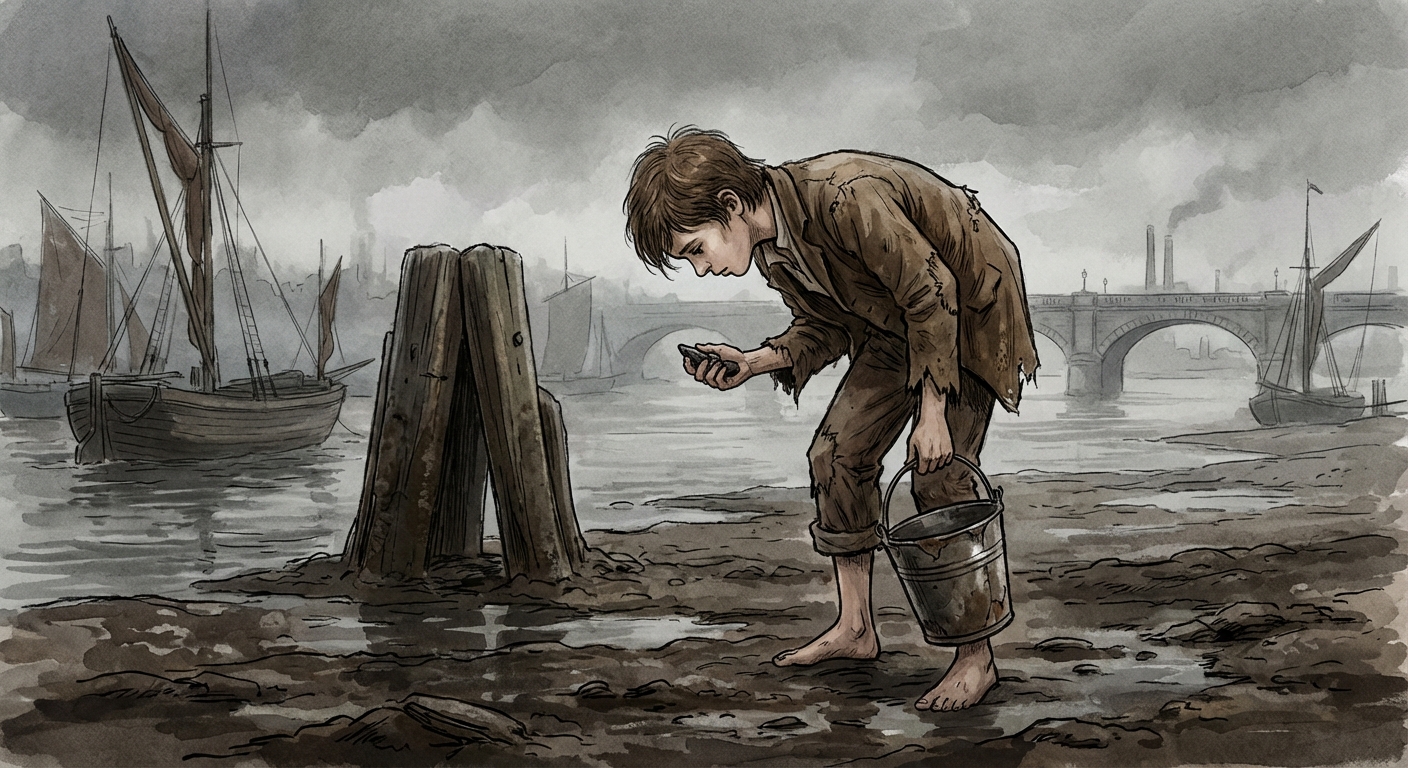
Picture this: it’s the 1850s. The Thames is, to put it delicately, an open sewer. The stench alone could knock you sideways. And yet every day, when the tide pulled back and exposed the riverbed, figures would scramble down the banks searching for anything of value.
The work was miserable and dangerous. Disease was rampant. And the haul? Usually disappointing. A broken clay pipe. A few buttons. A pottery shard. On a good day, maybe a coin. These small, unglamorous finds were the difference between eating that day and going hungry.
Victorian journalist Henry Mayhew documented the mudlarks in his famous survey of London’s working poor, painting a picture of children as young as six wading through the Thames mud. It’s a heartbreaking image, but there’s a stubborn resilience in it too. These were people who refused to give up, who got up every single morning and went back to the river because the alternative was worse.
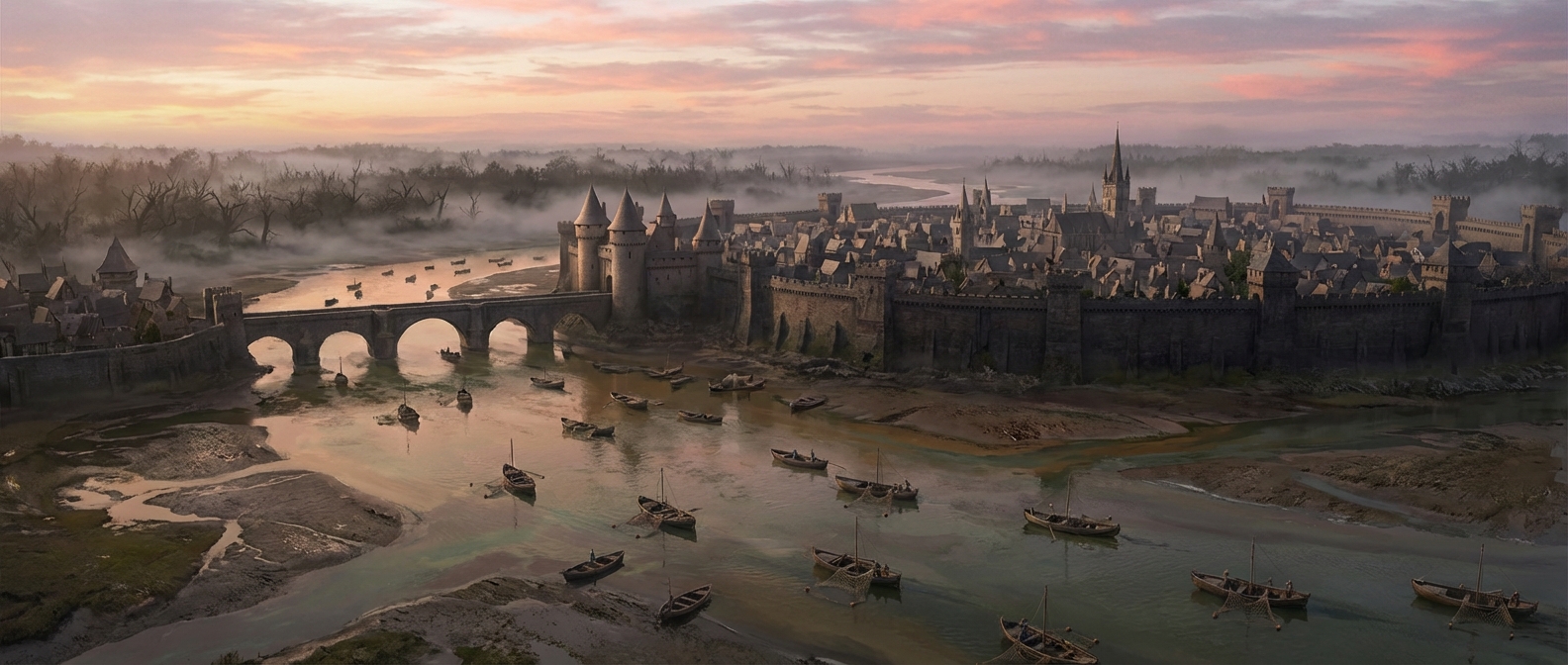
That resilience is what I wanted to capture in Nyssa. When I was building her world, the kingdom of Erishum, the River Assur, and the shadow district where the poorest residents live in the gloom of the city walls, I kept thinking about those real Victorian kids. Nyssa’s daily routine of wading into frigid water at dawn, sifting mud through her net, hoping for a spoon or an intact pipe she can trade for a few coins… that’s a fantasy version of a very real struggle. Her dream of scraping together enough money for a baker’s apprenticeship echoes the dreams of countless real mudlarks who wanted nothing more than a way out of the muck.
Modern Mudlarks: History Hunters on the Thames
Here’s where the story takes a wonderful turn. Mudlarking didn’t die out, it evolved.
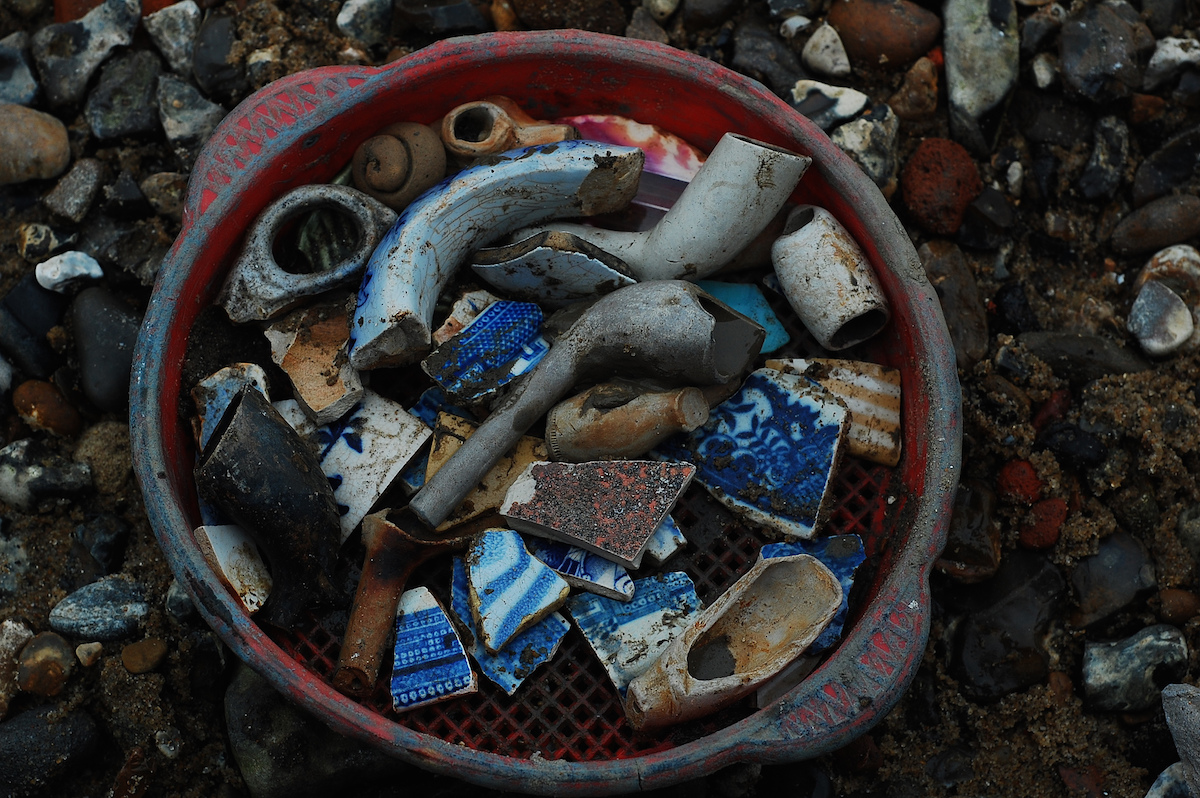
Today, modern mudlarks still walk the banks of the Thames at low tide, but the context is completely different. Instead of desperate survival, it’s become a form of urban archaeology. Armed with keen eyes (and sometimes metal detectors), today’s mudlarks search for historical artifacts that the river has been holding onto for centuries. People have pulled Roman coins, medieval pilgrim badges, Tudor-era jewelry, Georgian clay pipes, and Victorian buttons from its muddy banks.
The river is like a time capsule that keeps opening. Every tide reshuffles the riverbed, exposing something new. An object that’s been buried for four hundred years might suddenly appear on the surface after a particularly strong storm, which is exactly the kind of detail that made it into my novel. Nyssa is always hopeful after a storm, knowing the weather might have churned up something special from the deep.
Modern mudlarking does require a permit from the Port of London Authority (you can’t just wander down there and start digging), and there are rules about how deep you can excavate and what you must report. Significant finds go to the Museum of London, which has an incredible collection of Thames-found objects. It’s a real partnership between everyday treasure hunters and professional archaeologists.
If you’ve never watched mudlarking videos, I highly recommend looking some up on YouTube. There’s something wonderfully meditative about watching someone carefully clean centuries of river mud off a tiny artifact. It’s like watching history wake up.
Where Fantasy Meets the Mud
When I sat down to write The Mudlark, I didn’t want to write a historical novel set in Victorian London. Instead, I wanted to take the essence of mudlarking and transplant it into a fantasy world where I could explore the same themes from a different angle.
The mudlarks of Victorian London were at the very bottom of society, invisible to the people who walked the streets above them. They knew the river better than anyone, understood its moods and secrets, and yet they had almost no power or status. That tension, between intimate knowledge and utter powerlessness, became the emotional core of Nyssa’s story.
In Erishum, the river doesn’t just hide old spoons and broken pipes. It carries whispers of places that the Dying Wilds have devoured, artifacts from civilizations that no longer exist. Nyssa’s mudlarking connects her to a lost history that the people in power would rather keep buried. And just like the real mudlarks who have helped archaeologists piece together London’s hidden past, Nyssa’s finds end up being far more important than anyone – including Nyssa herself – initially realizes.
The River Gives, the River Takes
Whether it’s the Thames or the fictional River Assur, rivers have always been keepers of secrets. They swallow things up and spit them back out on their own schedule. They connect us to people who lived hundreds or thousands of years ago through the objects they left behind.
I think that’s why the idea of mudlarking grabbed me so completely that day in the car. It’s treasure hunting, sure, but it’s also time travel. Every object pulled from the mud is a tiny, tangible connection to a person who lived and worked and dropped something into the river, and then someone, years or centuries later, finds it and holds it and wonders about the person it belonged to.
That sense of wonder is what I tried to pour into every page of Mudlark. I hope you feel it too.
Mudlark is available now, and the story continues in The Gutter Shrike, told from Vallen’s point of view.