Locations & Worlds
Discover the settings of supernatural adventure
From the fog-shrouded streets of San Francisco to the treacherous wilds of fantasy kingdoms, explore the richly detailed worlds where paranormal romance and urban fantasy unfold.
Fae Realm
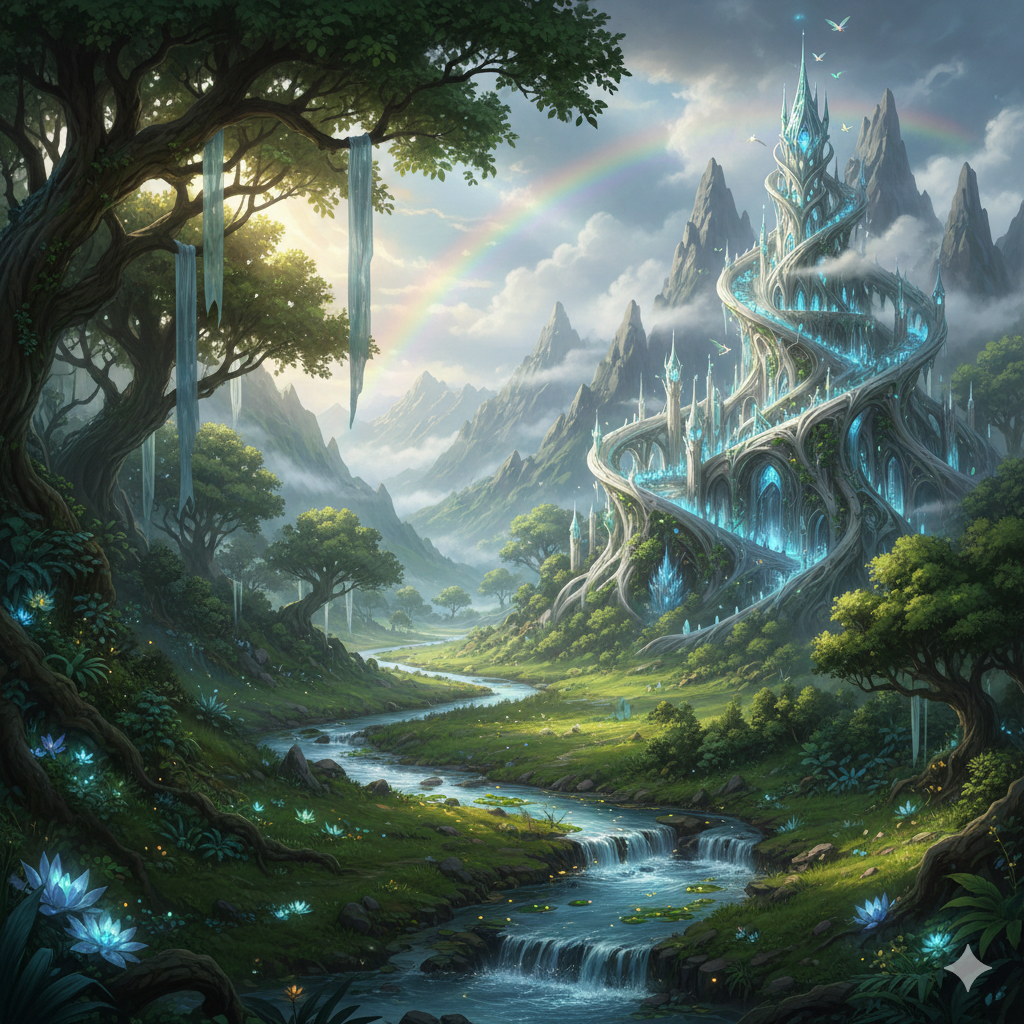
The Fae Realm is breathtaking and deeply wrong — and that contradiction is the whole point. On the surface, it's a fantasy postcard: a verdant valley cradled by soaring white cliffs draped in waterfalls, lush ivy, and soft dripping trees. Light sparkles in the mist. A cobalt-blue river meanders through the gorge floor while jagged mountains rise in the hazy distance, giving the whole place the feel of a hidden, protected sanctuary. Maeve's castle is the crown jewel — a delicate structure carved into a high mountainside cliff, climbing upward with dozens of ornate turrets as elegant as a swan's neck, gleaming in the sparkling fog like something made from spun sugar. But Sophie immediately clocks what's off about it. Everything is too perfect, too beautiful — it feels like a movie set, not a real place. She compares it to a boss's sterile mini-mansion where a talented designer created something impressive but utterly unlived-in, and the Rivendell-like splendor fills her with an instinctive, visceral hatred rather than awe. Inside the castle, floor after floor is filled with "uselessly opulent" rooms. And beneath all that pristine beauty is a dungeon stacked with cramped cages reeking of unwashed bodies and fear — the place where Maeve's people stole power from captive Mythicals. The realm's perfection is a lie built on the misery of others, and Sophie knows it in her gut before she even finds the proof. It's a gilded cage ruled by a tyrant, and Sophie's immediate urge is to tear the whole thing apart like a toddler with an abandoned sandcastle.
Gulf Breeze
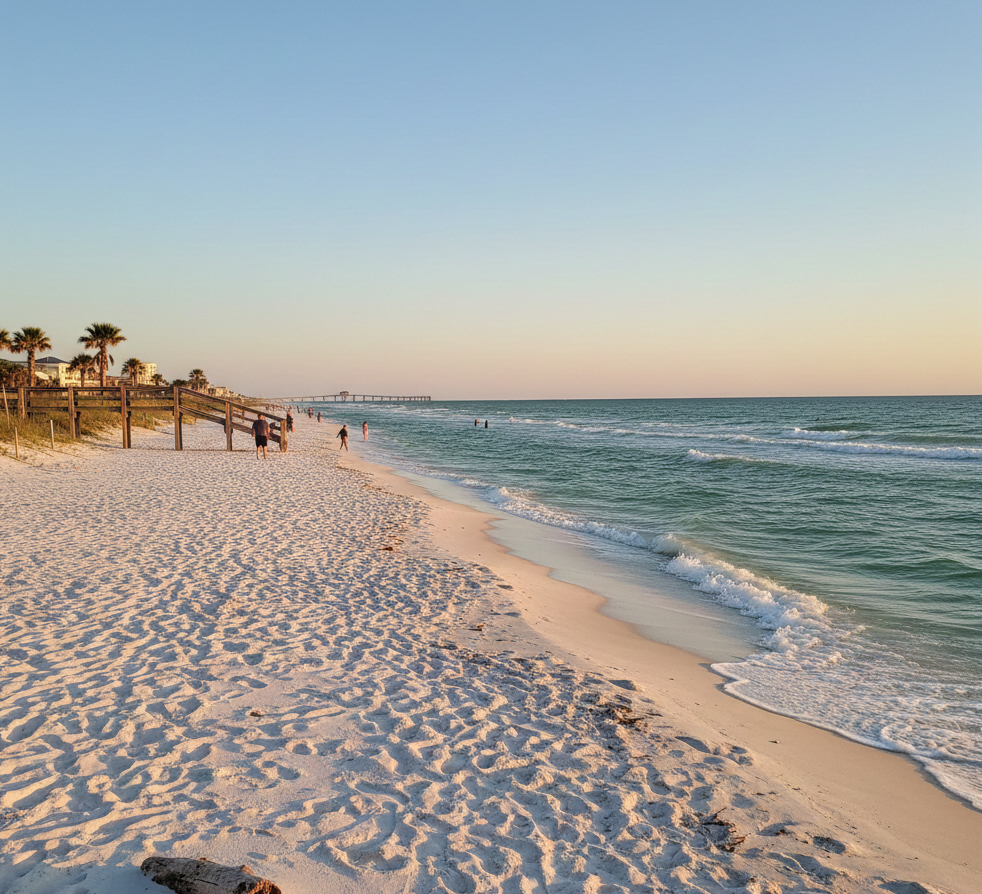
Gulf Breeze is a character in its own right — a sleepy, sweat-soaked Florida Panhandle beach town that's equal parts charming and suffocating. It's the kind of place where the humidity hits you before you've made it from your car to the front door, where the asphalt throws heat back at you in visible ripples even after sunset, and where no deodorant on earth stands a chance. The ocean breeze is the town's only act of mercy, a salty kiss that shows up just often enough to keep people from losing their minds. It's a working-class town dressed up in tourist drag. Sheryl's Shell Shack sells seashell "art" and t-shirts with dumb slogans behind a wall of glass overlooking actual gorgeous rolling dunes and cerulean water — the real beauty always just across the street from the cheap stuff. Hotels are painted in peach and seafoam green with seashell motifs embedded in the concrete, sailboat logos off-center, and lobby staff in Hawaiian shirts — corporate America's idea of "beachy" applied with the subtlety of a sunburn. Crab traps get repurposed as side tables. It's tacky and earnest at the same time, like a kid's shoebox diorama of their favorite vacation. The crematorium has fake brick overlays on the front and bare cinderblocks around back. The apartment complex has oleander bushes at the entrance and a diner table salvaged from a place that went under. This is a town where things get a facelift on the side that faces the street and stay raw everywhere else. The few young people in town are living a bohemian beach lifestyle — rum runners and fish tacos at the tiki bar on Fridays — while Gideon is working two jobs, paycheck to paycheck, too broke and busy for any of it. But step off the sidewalk and you're in old Florida: ancient oaks draped in Spanish moss, cypress trees with gnarled arms, palmetto fans, kudzu choking everything, mosquitoes the size of your ambition, and cicadas providing the soundtrack. The forest is beautiful and dense and indifferent — it'll hide a murder scene just as easily as it hides a golf course. It's the Redneck Riviera, where the more north you go the more southern you get, where heat waves harvest snowbirds and the walk-in fridge at the crematorium doubles as an air-conditioning break. Gulf Breeze is paradise if you're a tourist with a week and a cooler full of beer, and a slow grind if you're a local with a crappy hatchback and a dream that stalled out somewhere around sophomore year.
Ireland
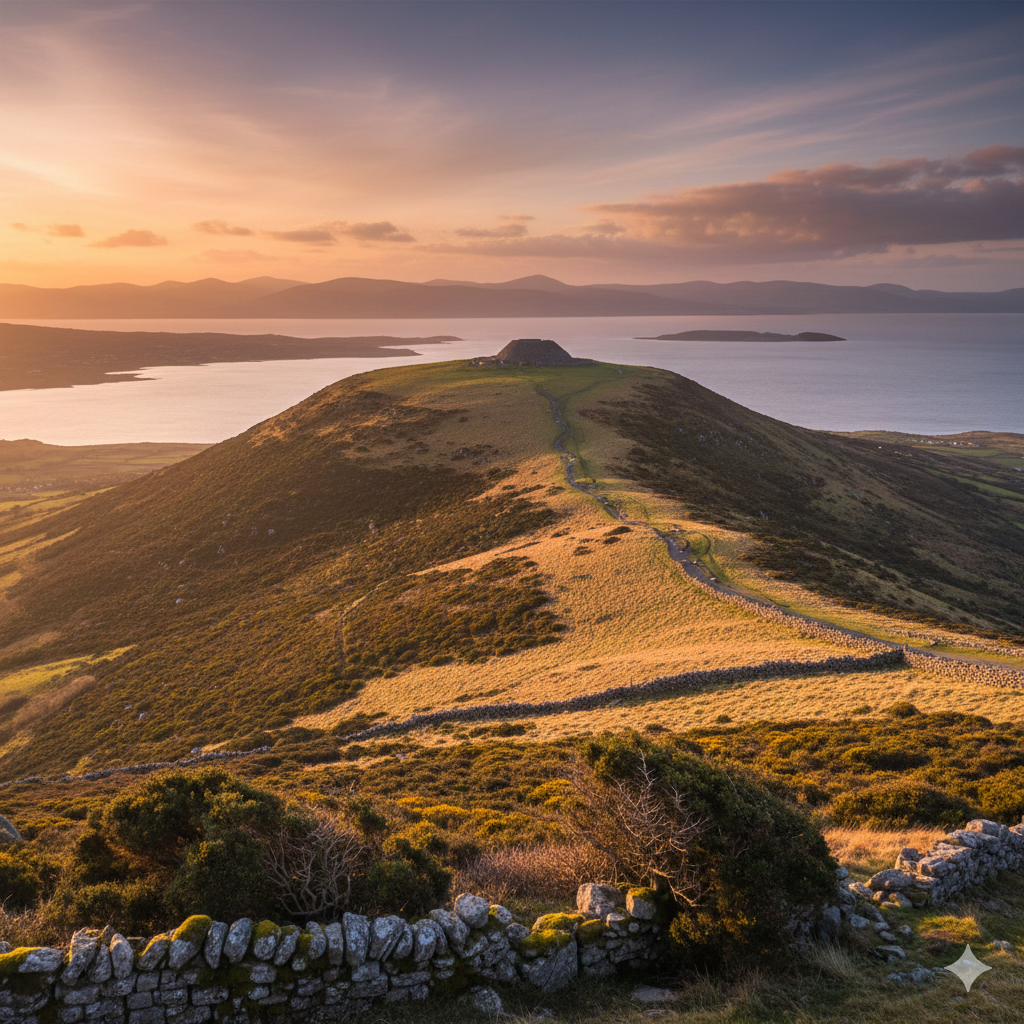
Ireland in this novel is a character unto itself — ancient, unassuming, and quietly saturated with magic that the modern world has mostly forgotten about or paved over. Sophie arrives expecting tourist infrastructure and finds instead a country where portals to other dimensions sit in cow pastures behind unlocked gates, and the entrance to the literal Underworld is a muddy two-foot hole hidden under a hawthorn tree that you could walk right past without noticing. Sligo is their home base — a small town of brick-laid sidewalks and squat, flat-faced buildings crammed together side by side, radiating a sense of age that makes San Francisco feel like a younger sister who's too big for her britches. The Garvoge River (which everyone calls the Sligo River) flows through town past shops, houses, and many pubs, emptying into Sligo Bay. Rhydian's running tour focuses on which restaurant has the best curry takeaway and which coffee shop is overpriced, and the group stays in studio apartments above a wolfhound shifter clan pub where the rooms face the river. The Sligo Abbey, built in the thirteenth century, is five euros to tour and mentioned almost as an afterthought — that's how casually ancient this place is. Knocknarea dominates the skyline — a strange flat-topped limestone mountain formed by glaciers, rising alone from the surrounding landscape with no range attached to it. The hike starts across the street from the Sligo Rugby Club (two euros in the honesty box), through fields so impossibly green they look like someone cranked up the saturation — the Emerald Isle earning its name. The path winds past patchwork-quilt pastures delineated by dark hedges, fluffy black-faced sheep that Ruby tries desperately to befriend, and a derelict ancient stone cottage with its roof long gone but its walls still standing. The ascent passes through a coniferous woodland that Ruby compares to the scene where Boromir dies (earning Sophie's undying irritation for calling him "that guy"), across a slippery bog bridge, and up to a summit with panoramic views from the wild Atlantic coast to distant Benbulbin. The cairn itself sits on top — over thirty feet tall, the second-largest in Ireland, a monolithic pile of thousands of rocks lugged up the mountain millennia ago to honor whoever's buried inside, still unexcavated. Strandhill beach is visible in the distance, with black dots of surfers bobbing in the freezing water. Creevelea pulls double duty. The ironworks is practically a ruin reclaimed by the jungle — all that's left is a single blast furnace that looks like a two-story red-brick vase being swallowed whole by vines, lichen, moss, and a small tree growing from its top lip. Sophie crawls inside the belly of the furnace and looks up at a bright circle of light overhead like the bottom of a well. The Creevelea Friary, meanwhile, is a former Franciscan monastery (the last built in Ireland before Henry VIII dissolved them all) with stone carvings of Saint Francis still intact inside the cloister. Its graveyard progresses from elaborate Celtic crosses near the entrance to increasingly crude, ancient headstones further in — and in a far corner, slightly apart from the rest, sits Róisín's lonely round-topped grave, carpeted in white heather, pulling Sophie toward it before she even knows whose it is. Rathcroghan is the most improbable of all. Laura describes it as over two hundred archaeological sites surrounding a main royal stronghold — the birthplace of Halloween, where people once dressed as Arawn's ghastly beasts during Samhain so he wouldn't accidentally drag them to the Underworld. But when they arrive, it's a rutted lane ending at a gated field full of livestock. The Oweynagat Cave — the gate to the Otherworld, the mouth of "hell" — is an upside-down triangle of a hole barely two feet across, hidden under low-hanging branches at the base of a three-foot ridge. Róisín is devastated: where there were once temples, altars, and a massive compound, there are now sheep lazily chewing grass. The only marker is one tiny sign set off to the side like an afterthought. And yet the magic in the soil is still so potent that Laura's dowsing pendulum spins in erratic circles like a drunken clock. The overall effect is a country where the extraordinary hides in plain sight behind the utterly ordinary — where you park at a rugby club to climb a mountain tomb, close the gate behind you so you don't let out the cows on your way to unlock a portal to the afterlife, and the most significant archaeological sites in the world just sit there in fields, unguarded and unnoticed, waiting for someone who knows what to look for.
Kingdom of Erishum
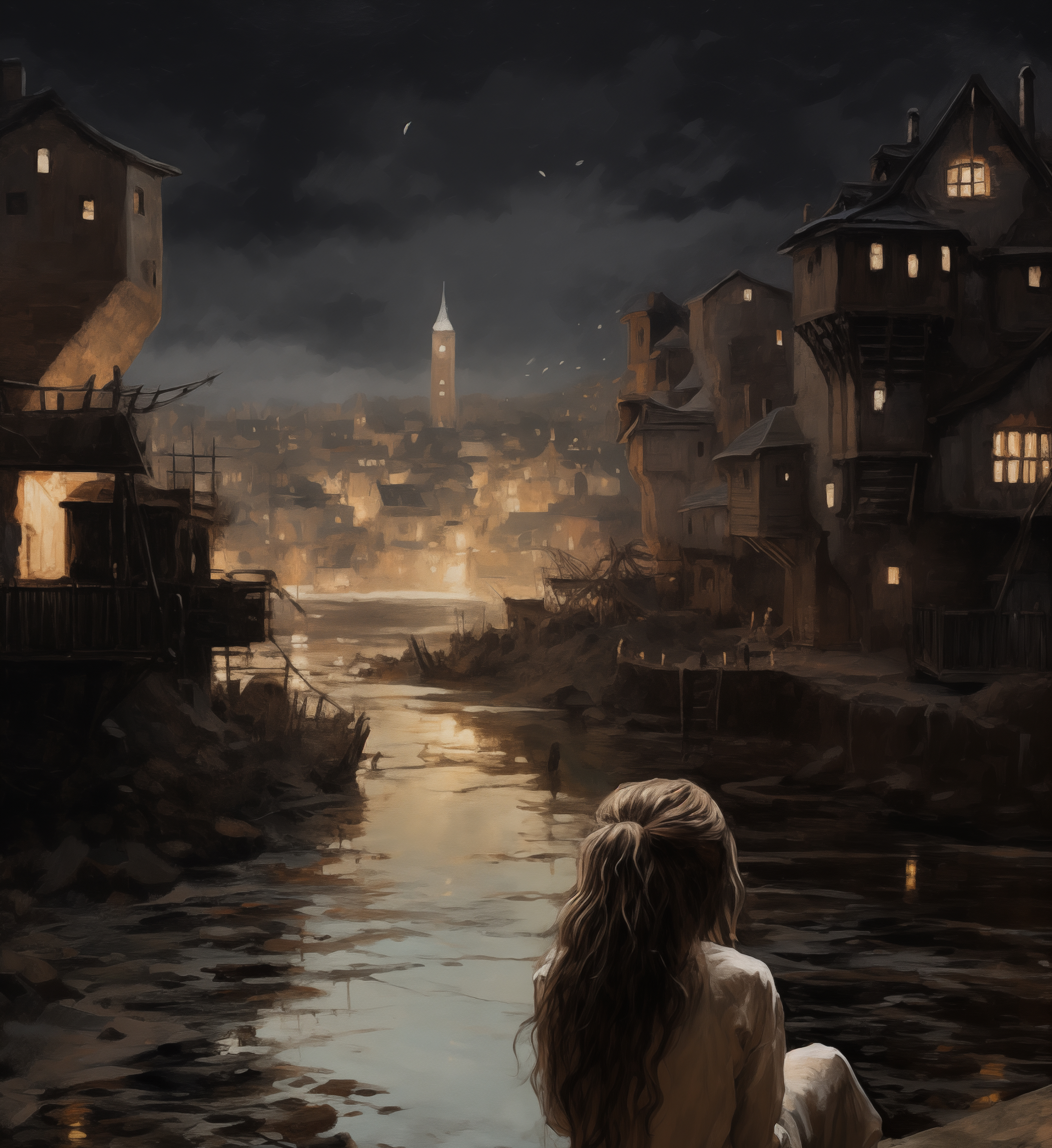
A sprawling fantasy realm where political intrigue meets raw survival. The Kingdom of Erishum is a land of stark contrasts—gleaming noble courts standing above squalid city streets, ancient forests hiding deadly Hyvas, and a society where your birth determines everything, unless you have the courage to seize your own destiny.
Las Vegas
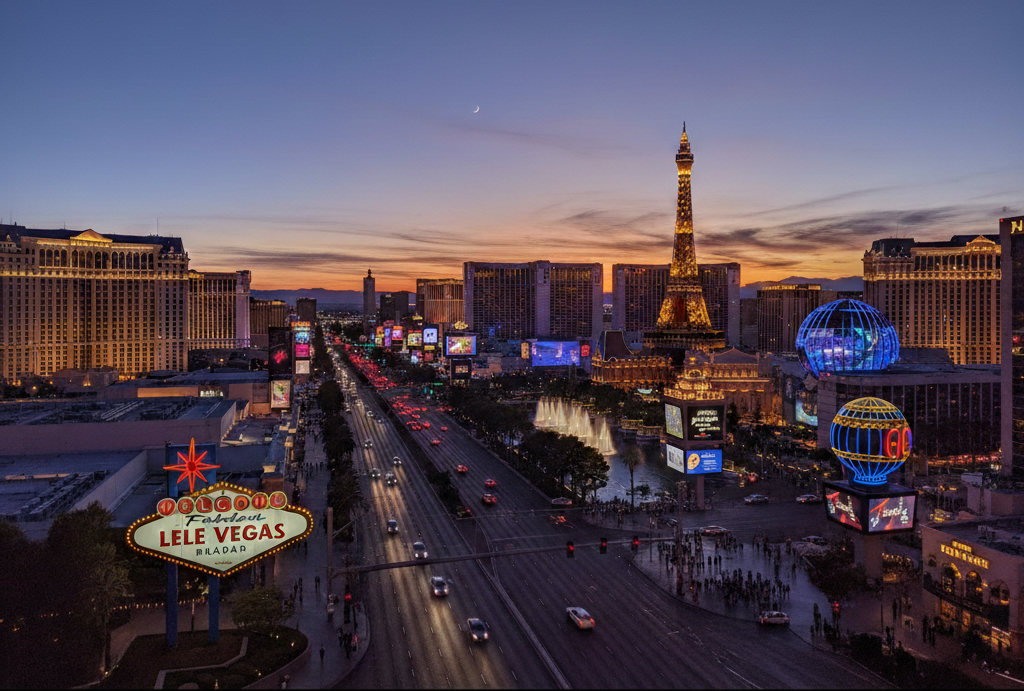
Las Vegas is a city of contradictions dressed in sequins, and the book leans into every one of them. It's blazing hot during the day — desert heat that slaps Sophie in the face the second she steps off the jet and has her makeup threatening mutiny — and then shockingly cold at night, leaving her shivering in a bandage dress outside a steakhouse with no coat because Mim thinks outerwear would ruin their "look." It's a city of spectacle layered over grit: the glittering casino-laden Strip with its Bellagio fountains and high-roller restaurants gives way to the darker suburban streets just a few turns off the main drag, where the bright lights vanish and everything feels grittier and more honest. The novel uses that geographic slide — from neon to nondescript — as a narrative engine. The team eats tiny pretentious morsels at a Scandinavian fine-dining spot on the Strip, then scarfs fast-food burgers in the car because nobody's actually full. They sip champagne at a cabaret show inside Body Shots, a venue that feels like a seduction in architectural form — tufted burgundy leather, smoky low light, spotlit red velvet curtains — and then end up tailing a suspect through a fast-food drive-thru into the Gateway District. The real Vegas in this book isn't the Strip; it's the Arts District, where murals cover every surface and a dead man's last memory leads to a painted woman's face on the wall of a nondescript beige office building. It's the suburbs where a bear clan runs a hunting-lodge steakhouse surrounded by desert gravel and succulents — a mountain cabin aesthetic plopped into an arid landscape that somehow works. It's an Indian restaurant run by a giant prophetic birdwoman hiding behind a carved door depicting the goddess Annapurna. Las Vegas here is the perfect mission city: loud enough to hide in, flashy enough to make their fake high-roller cover story plausible, and seedy enough underneath that an illegal shifter fight ring can operate in a basement while the rest of the city doesn't blink. The dichotomy is the point — it's a place where Sophie can play arm candy in stilettos and shapewear one hour and then stand over unconscious criminals in a knockout-gas-filled building the next, staring at a dead man's murderer's shoes.
Medeon
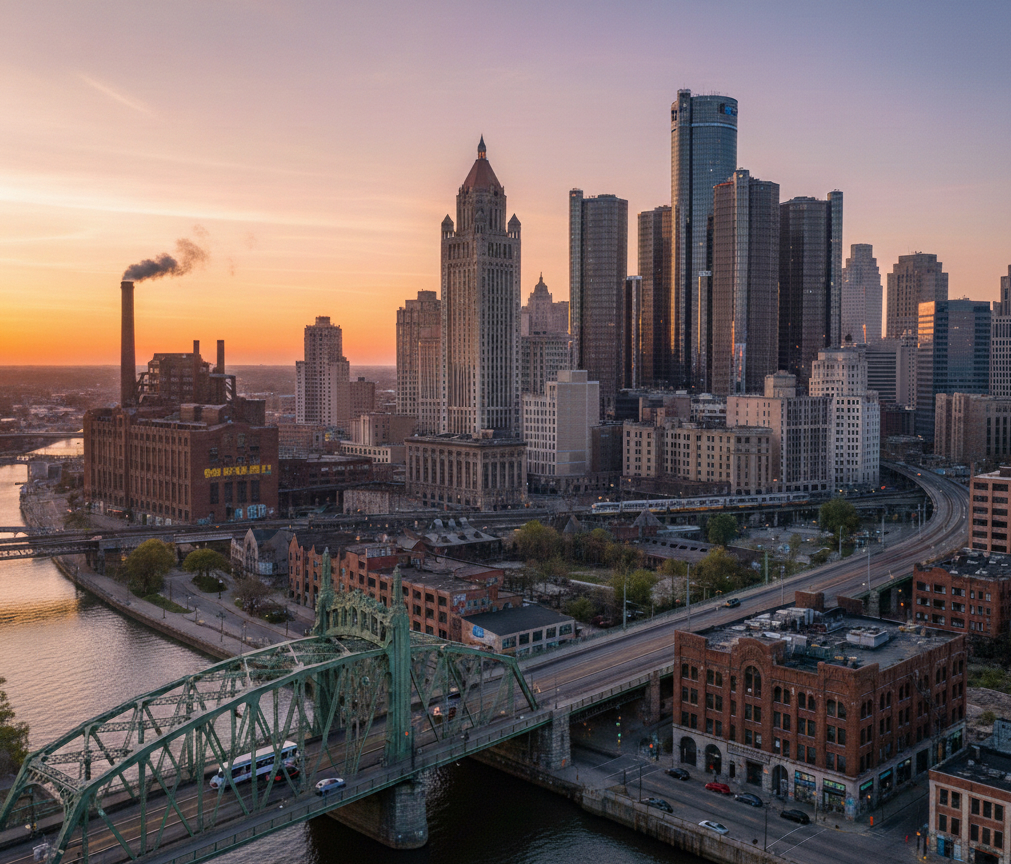
Medeon is grimy, gorgeous, and completely unapologetic about being both. It's a former Greek immigrant shipbuilding city on the Taskequan River that peaked about seventy years ago and has been stubbornly refusing to die ever since. The skyline is all shades of gray and rust — abandoned factories, empty lots, chemical plants belching steam into a charcoal sky, chain-link fences around loading docks where nobody's loading anything anymore. Sidewalks crack and buckle. Hallways smell like cigarettes and something sour you don't want to identify. Winter here has teeth. But the bones are extraordinary. The Lyceum Public Library rises like a dignified elder surrounded by ambitious glass-and-steel grandchildren, its limestone weathered to soot-edged gray, hand-carved ceiling medallions commissioned by the city's founder — a Greek robber baron who made his fortune in shipbuilding and wanted to rival the great libraries of Athens. Corinthian columns, mosaic floors, friezes of Greek mythology. A faded mural of Mount Olympus overlooks a vacant lot where kids play in broken concrete and weeds. The city's Greek heritage is everywhere, in architecture nobody maintains and pride nobody funds. And then there's the hidden Medeon — the forgotten cemetery buried behind a defunct paper mill and a rusted water treatment plant, headstones drunk-angled and half-swallowed by dead grass, a massive elm knocking graves askew like chess pieces on an abandoned board, completely silent except for the hum of machinery from surrounding plants. The city literally built around it and forgot. It's the kind of place that keeps secrets not on purpose, but because nobody's paying enough attention to notice them. Neighborhoods shift block by block. One minute you're passing a vintage clothing store and a yoga studio with tasteful window displays; the next it's a laundromat with a buzzing neon sign and a corner store with bars on the windows. There's a dive bar called the Anchor on Porter Street you don't walk past alone at night. There's a gentrified shopping district that screams seventy-dollar sage bundles. There's a converted canning factory where artists and librarians and freight dispatchers live in rent-controlled apartments with enormous factory windows that let in amazing light. The Beacon of Light Ministry operates out of a repurposed movie theater with thick curtains hiding the interior. The subway smells like stale coffee and exhaust, and someone's set up camp by the ticket machines. Medeon is the kind of city where people land when they're starting over — because there's a job that'll hire a résumé heavier on retail than credentials, because rent-controlled apartments still exist if you know the right person, because it's far enough from wherever you came from. It's a place with character, as Darby diplomatically texts a friend. And it isn't entirely a lie.
Millhaven
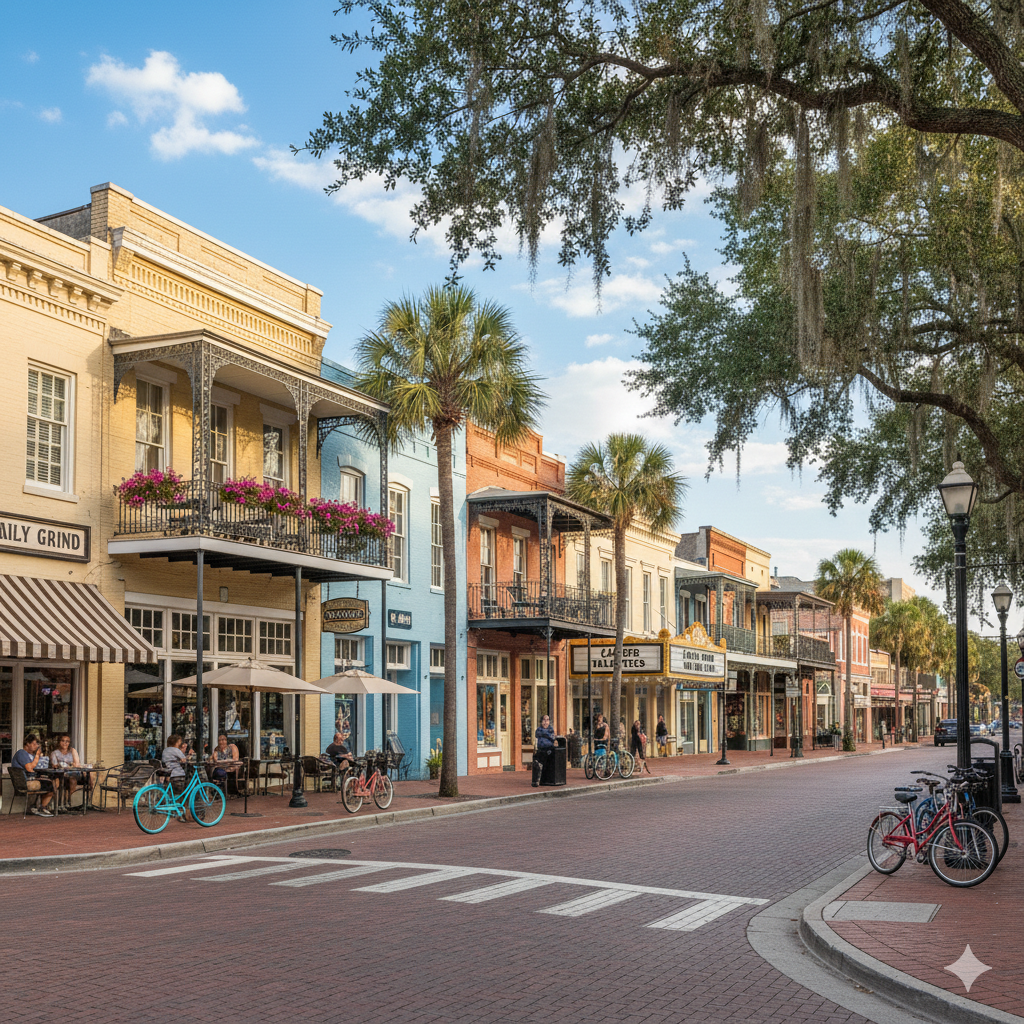
Millhaven is a small central Florida lakefront town that's trying really hard — and mostly succeeding. It's got the kind of historic downtown that looks frozen around 1950, all old brick buildings with wrought iron balconies and colorful awnings running parallel to Lake Monroe, with a riverwalk where people fish off the seawall and strings of lights crisscross overhead waiting to turn the whole place into a postcard at dusk. Horse-drawn carriages dodge tourists snapping photos of the ornate courthouse. The old train depot from 1887 has been lovingly converted into a food hall with Edison bulbs and Korean corndogs. There's a German restaurant, a diner that used to be a Woolworth's, and a bar that used to be an auto repair shop. Everything in Millhaven used to be something else. That's the thing about this town — it's a place defined by reinvention. A decade ago, the downtown was crumbling and forgotten. Now it's boutiques and art galleries and craft beer, driven by a mayor with wild Appalachian witch magic and a vision for the governor's mansion. But scratch the pretty surface and the cracks show fast. Drive a few blocks from the marina and the scenery shifts to peeling paint and sagging porches. The homeless camp in the woods behind the thrift store while workers install a bandstand in the pedestrian plaza for the Fourth of July. The Royal Palmetto Hotel — the crown jewel of the whole revitalization dream — is still a hollow, moldering shell with smashed windows and snakes in the baseboards, its faded Mediterranean Revival glamour rotting from the inside out. Clara Bow once walked those halls. Now the carpet squelches underfoot and mold creeps up walls where the original wallpaper curls away in long strips. Millhaven is a town that desperately wants to be its best self, wrapped in bunting and civic pride and historic preservation covenants — but underneath, something is draining the life out of it, one body at a time. It's charming and sinister in equal measure, the kind of place where the mayor's magic has literally soaked into the walls of city hall, and where the dead accumulate in quiet corners while the living set up for a parade.
Murias
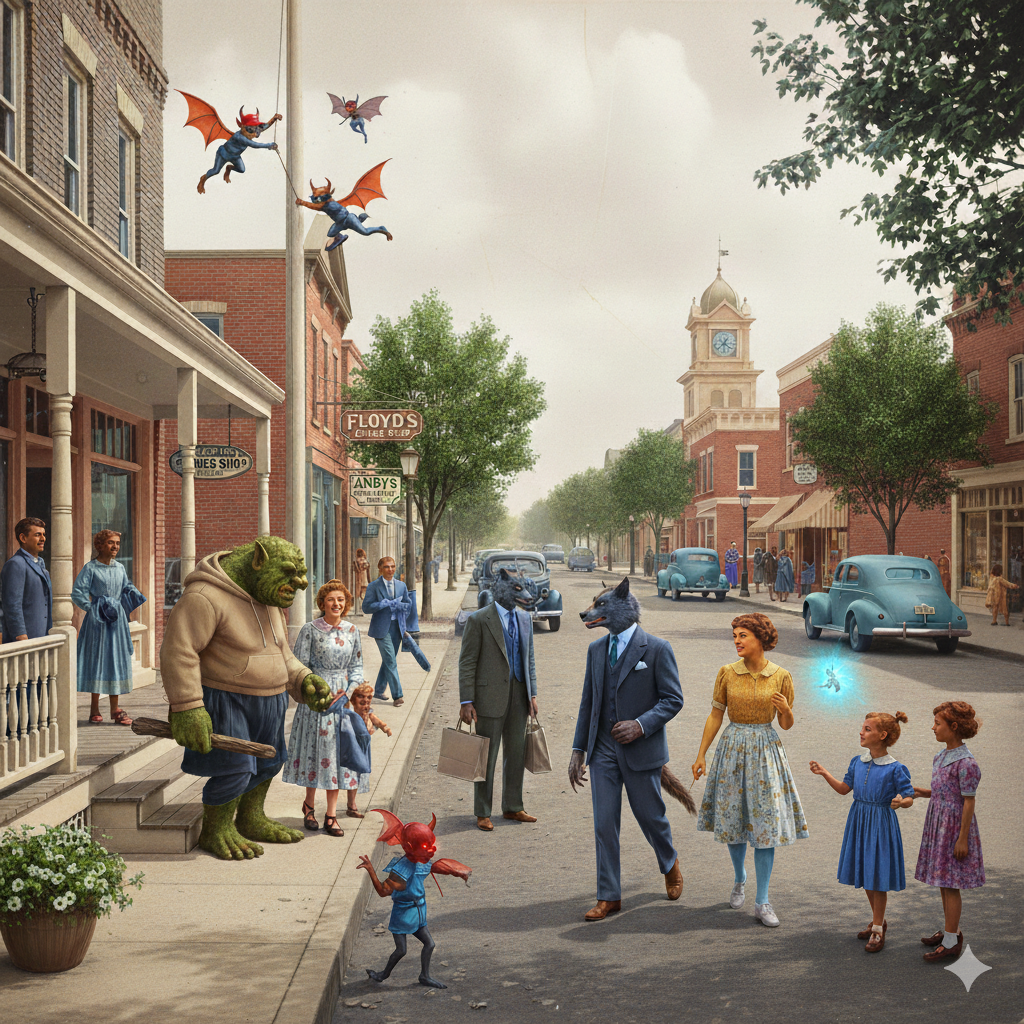
Murias is a place that shouldn't exist and knows it. It's a small Northern California town tucked into a valley between ancient redwoods and the Pacific, protected by a ward that makes anyone approaching it feel lost, panicked, and desperate to turn around — and the only way in is a rutted track that looks like a forgotten logging road swallowed by ferns and pine needles. It doesn't show up on Google Maps. It's been scrubbed from satellite imagery. If you don't already know where it is, you will never find it. But once you're through the ward, it opens up like a secret. A bright valley nestled among towering sequoias, a meadow full of Roosevelt elk shifters the size of Clydesdales grazing on wildflowers, and a hint of steel-blue ocean between the bluffs to the west. The town itself is pure Norman Rockwell by way of the Mos Eisley cantina — a lamppost-lined main drag crowded with vintage storefronts, a church steeple, a bakery, a brick pub with stained-glass windows, a cannabis dispensary crammed between a diner and a bookstore, and a candy shop that looks like an edible gingerbread house. But on the sidewalks, centaurs walk out of grocery stores carrying paper bags, a polar bear so enormous people flatten against buildings to let it pass, trolls and ogres stroll next to gossamer-winged sprites, and the receptionist at the coroner's office is a Gorgon with a mouthful of fangs whose snakes coil around her head like a French twist. It's Mayberry, if Mayberry's population included half of humanity's mythology. Beyond the town, it gets wilder and more elemental. There are druid cabins hidden deep in the old-growth forest, fire pits with human remains in the ashes, and murder-crows perched on rusty tripods staring you down with unsettling intelligence. The coastline is stunning and brutal — craggy cliffs plunging into churning dark water, rip currents strong enough to kill, Agate Beach scattered with smooth, fire-orange stones and driftwood, and a cold briny mist that cuts through your jacket like needles. Fern Canyon is a fifty-foot gorge draped in dripping ferns and moss that feels genuinely prehistoric, like something time forgot about. The Butterfat Palaces — ornate Victorian mansions built by old dairy money — sit on green hilltops overlooking the ocean like cheerful painted jewels. It's beautiful and sinister in equal measure. A place where you can eat a bear claw from the local bakery in the morning and pull a death vision from a vivisected corpse in a blood-soaked shack by afternoon. Murias is the Mythical world's front door, dressed up like a quaint small town, and it absolutely does not care if you're ready for what's inside.
Otherworld
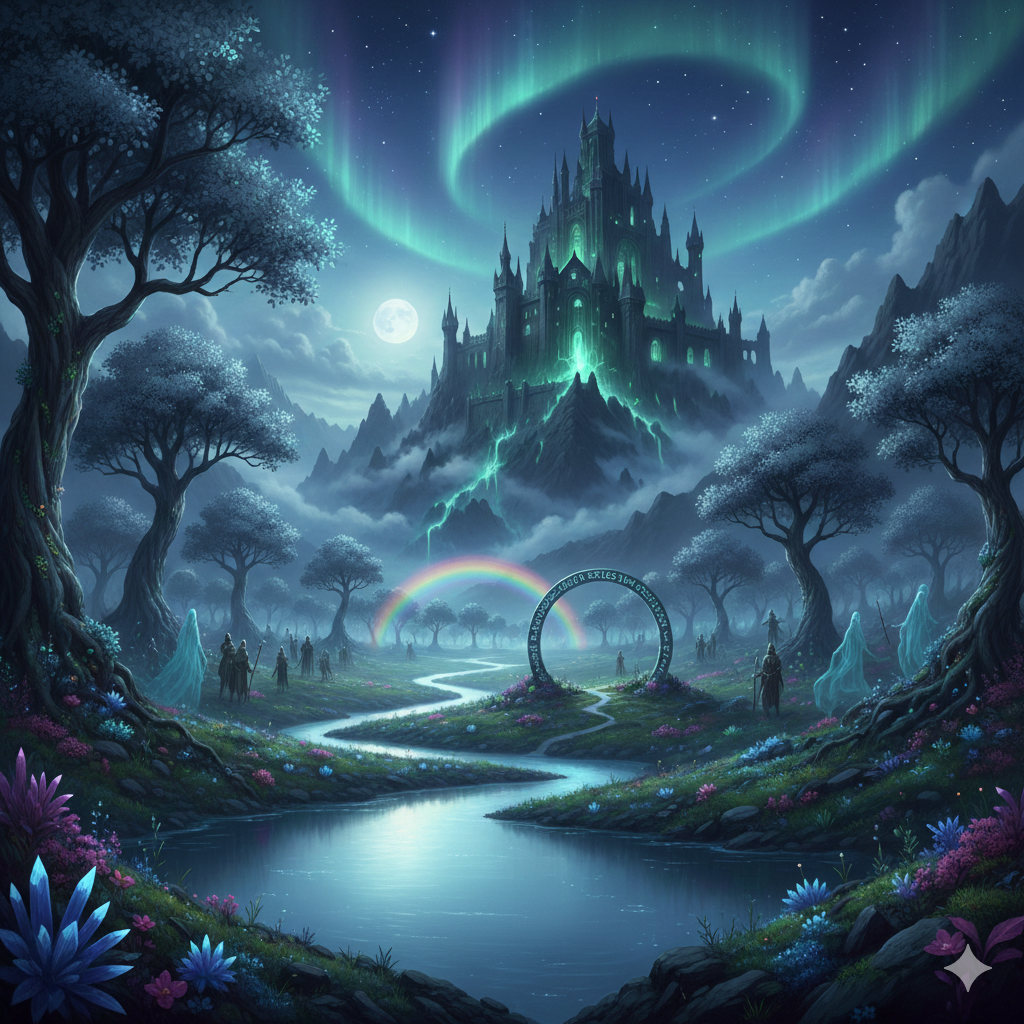
The Otherworld is a paradise running on fumes. According to legend — and confirmed by Róisín — it's supposed to be an idyllic realm of perfect peace and beauty, free from disease, hunger, and strife. Not hell, despite the "Underworld" label — more like heaven, powered by death itself. Each spirit who pledges to Arawn's rule adds the power of their death to the realm, and Róisín insists there's nothing grim about that: death is natural, she says, made of grief and love and legacy and renewal. It's the absence of death that turns someone into a hollow monster like Maeve. When Sophie first steps through the portal, the bones of that paradise are still visible. It's a world out of Camelot — wild green rolling hills, herds of untamed horses, strange golden birds with swan-like necks circling overhead, and an enormous dark castle clinging to the base of a massive mountain like something out of a fairy tale. There are stone cottages with thatched roofs, cobblestone paths, and pastures full of plump, unfamiliar animals. The realm eliminates mortal needs entirely: Sophie feels no hunger, no thirst, no exhaustion. Physics is treated as "a mere suggestion." And tucked away from the castle is Arawn's favorite place — a hidden glen at the end of a winding forest path, carpeted in short grass and tiny pastel flowers no bigger than a thimble.
San Francisco
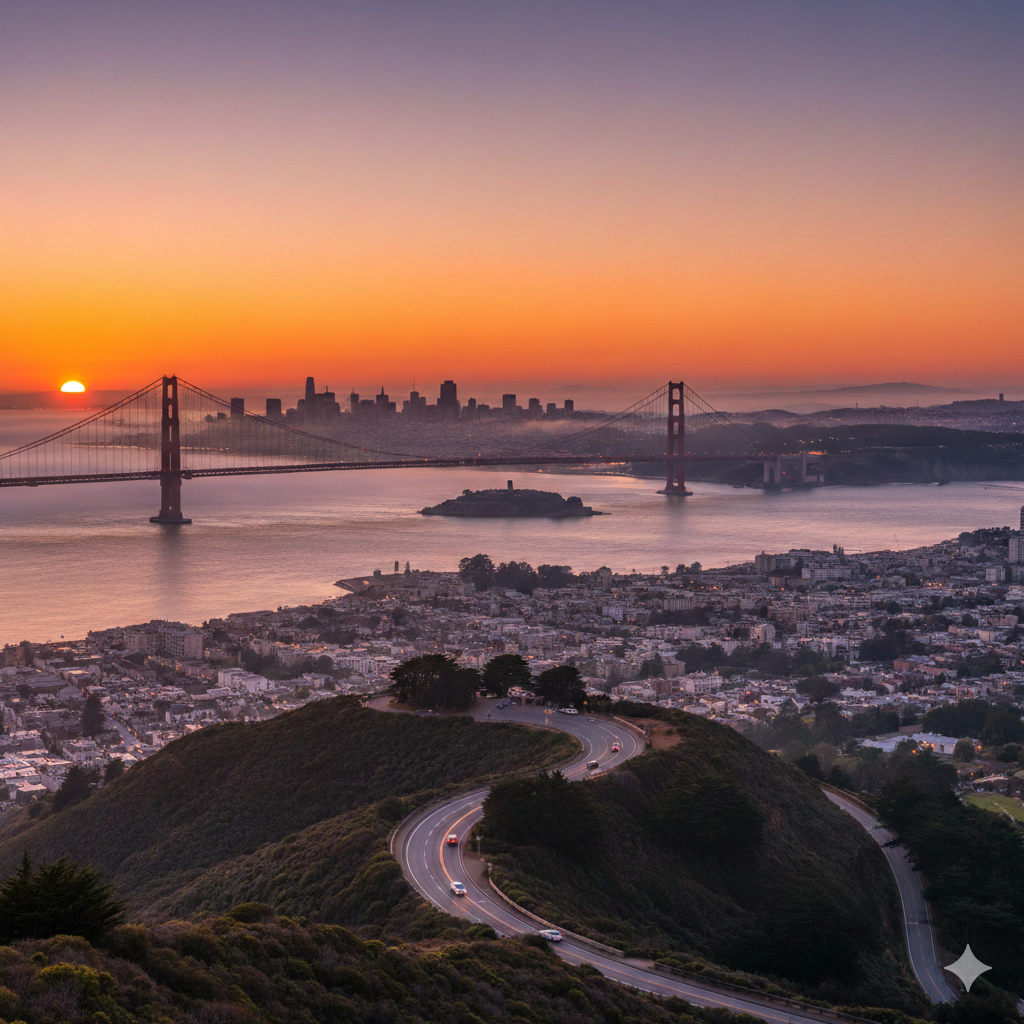
The foggy streets of San Francisco provide the perfect urban backdrop for supernatural intrigue. From the bustling Chinatown to the misty waterfront, the city's neighborhoods each harbor their own secrets and supernatural residents, creating a rich tapestry of paranormal romance and urban fantasy adventure.
San Francisco City Morgue
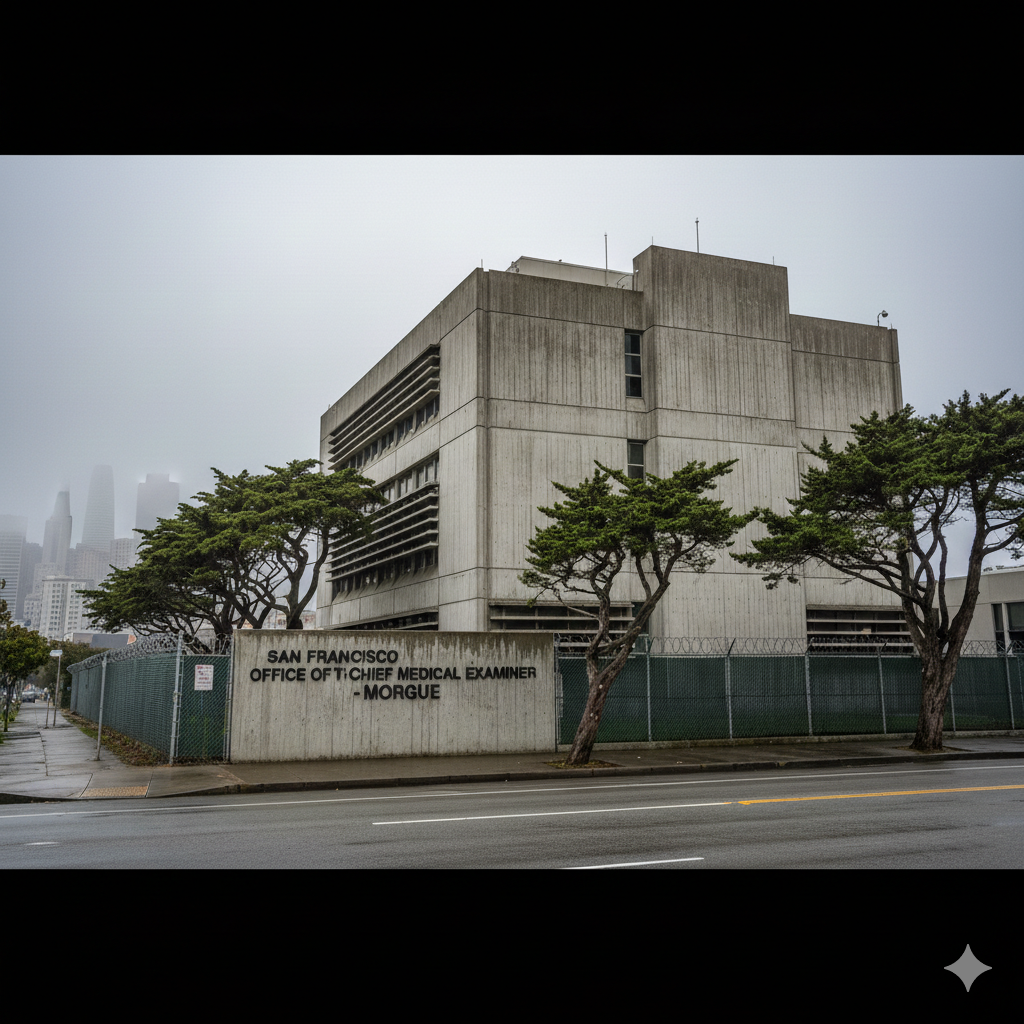
The heart of the Sophie Feegle series, the San Francisco City Morgue serves as both workplace and supernatural crossroads. Here, medical examiner Sophie Feegle encounters the hidden world of shifters, ogres, vampires, and other supernatural beings while navigating the line between the mundane and the magical.
Savannah
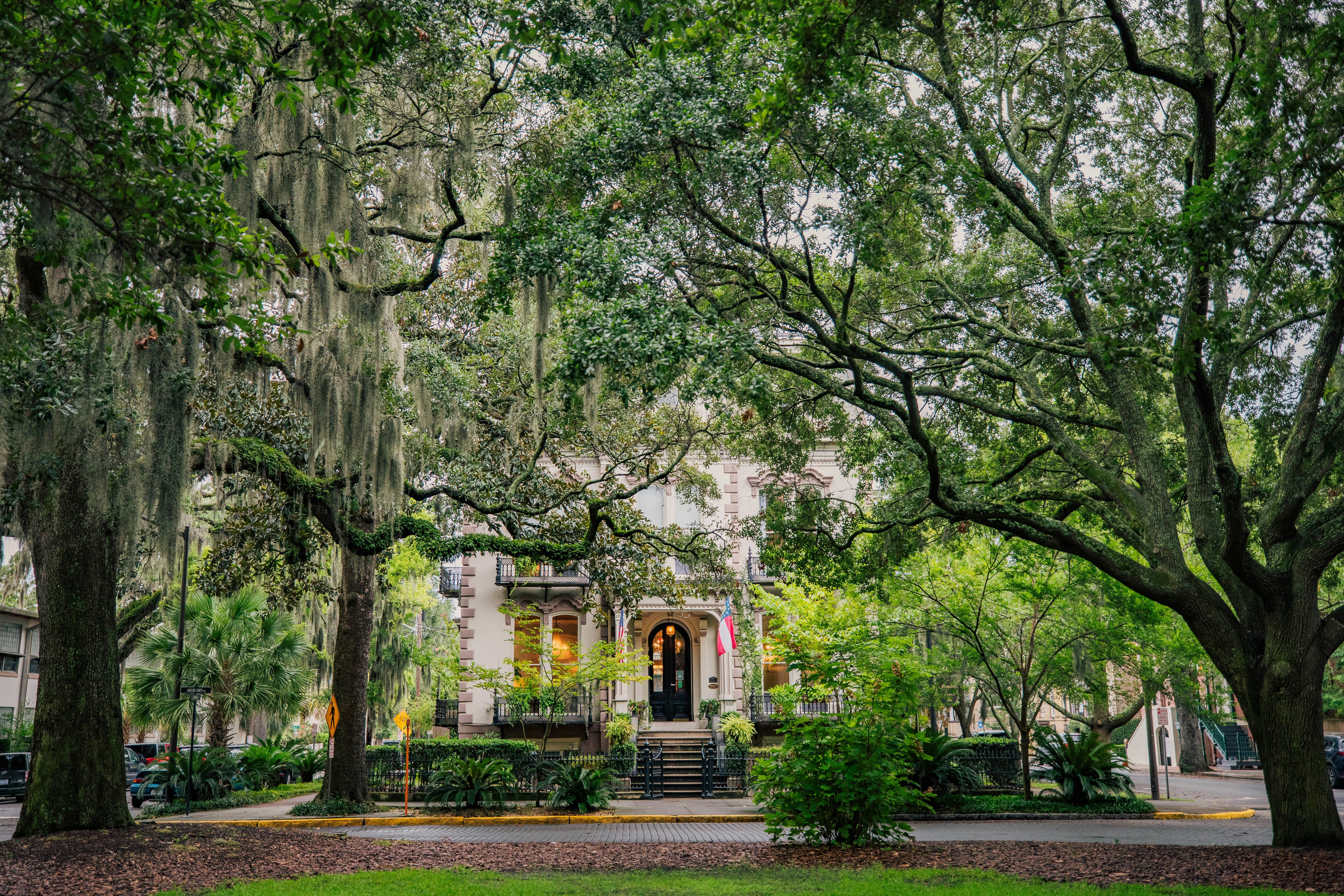
Known as America's first planned city, Savannah, Georgia, features a unique grid layout filled with moss-draped oak trees and historic public squares.
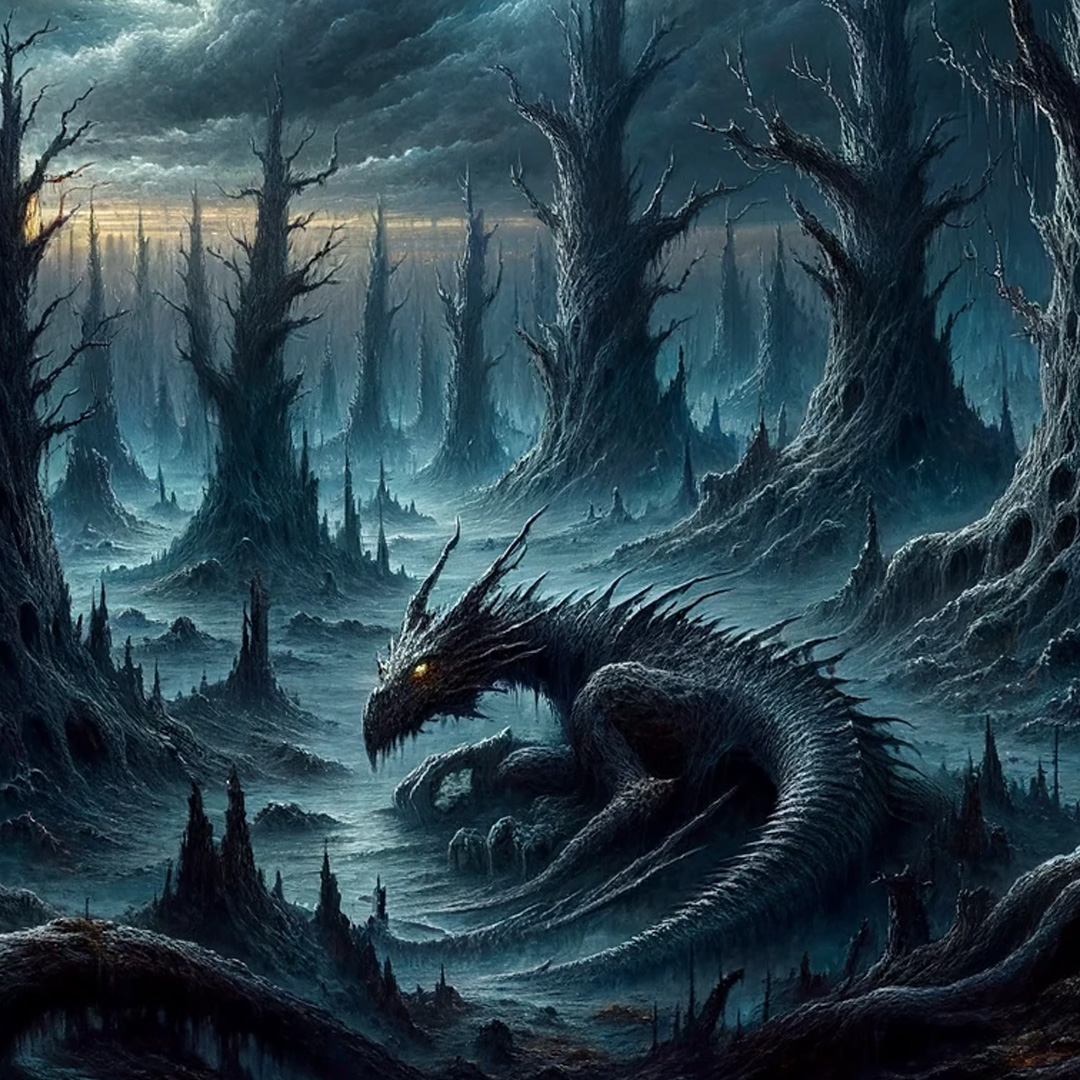
The Dying Wilds
The untamed frontier beyond the Kingdom of Erishum's borders, where civilization ends and primal danger begins. The Dying Wilds are home to the fearsome Hyvas and other creatures that prey on those foolish enough to venture into their domain. Yet for some, these dangerous lands hold the key to freedom.
Dive Into These Worlds
Discover the books and series set in these fascinating locations